
Last Updated: October 23, 2026
Quick Summary
The best Stealth Angel Survival alternatives are modular, repairable kits with published contents lists, real water treatment, two fire-starting methods, and standard-size refills you can restock locally. Compare kit archetypes by scenario rather than piece count, since the right choice depends on whether you need a home, vehicle, or wilderness kit.
- Budget all-in-one kits typically run $30 to $60 and suit a first kit or vehicle backup.
- Mid-range modular kits cost $80 to $150 and add a water filter, ferro rod, and bivvy.
- FEMA guidance points to a gallon of water per person per day for drinking and sanitation.
- A family of four needs roughly 12 gallons of water for a three-day kit.
- Check vehicle kit expiration dates and battery condition twice a year when you change your clocks.
Table of Contents
- Why Shoppers Look for Survival Kit Alternatives
- How to Choose a Survival Kit: Five Criteria That Actually Matter
- Best Survival Kits: What to Look For in 2026
- Emergency Survival Kit Checklist: What Should Be Inside
- 72-Hour Emergency Kit: What a Real Three-Day Kit Needs
- Matching a Kit to Your Scenario: Home, Vehicle, or Wilderness
- Common Mistakes to Avoid When Buying a Survival Kit
- Conclusion
- Frequently Asked Questions
Why Shoppers Look for Survival Kit Alternatives
Shoppers search for the best Stealth Angel Survival alternatives because pre-built kits rarely match one person's risks, terrain, or skill level.
A survival kit is a system, not a shopping list, and the components have to work together under stress.
What Makes an All-in-One Kit Worth the Money
An all-in-one kit earns its price when three things line up: contents you will actually use, build quality that survives storage and handling, and replacement parts you can buy later. A cheap 200-piece kit sounds generous until half are single-use bandages and a whistle that cracks in cold weather.
The Federal Emergency Management Agency's ready.gov guidance recommends every household maintain a basic disaster supplies kit with water, food, and medical items for at least several days. That framing helps: judge a kit by whether it covers the basics properly, not by piece count.
The Trade-Offs of Pre-Built Kits vs. Building Your Own
Pre-built kits save time and give you a starting structure. Building your own gives you control but demands research and repeated shopping trips.
- Pre-built wins on: speed, consistent packaging, and a clear checklist to audit against
- Build-your-own wins on: exact fit to your climate, medications, and skill level
- Hybrid approach: buy a solid base kit, then swap in your own water filter, medications, and navigation tools
Open your kit the day it arrives, lay everything out, and remove anything you cannot operate under pressure.
How to Choose a Survival Kit: Five Criteria That Actually Matter
Choosing a survival kit comes down to five filters: contents, build quality, weight and portability, replacement cost, and fit to your scenario. Run every candidate through all five.
Contents, Build Quality, and Replacement Costs
Contents should cover water, fire, shelter, first aid, light, and a cutting tool at minimum. Anything beyond that is scenario-specific.
Build quality shows in zippers, stitching, pouch material, and whether tools have real steel or stamped metal. We recommend checking the sheath and handle construction on any knife before trusting it.
Replacement costs matter more than buyers expect.
Best Survival Kits: What to Look For in 2026
The best survival kits in 2026 are modular, repairable, and honest about what they contain. When shopping for alternatives to Stealth Angel Survival, compare contents, weight, cost, and whether you can restock locally.
How We Compared Alternatives to Stealth Angel Survival
We evaluated each alternative on six factors:
- Published contents list: a full itemized breakdown, not a piece count
- Water treatment: a real filter or purification method, not just pouches
- Fire redundancy: two independent ignition methods
Stealth Angel Survival kits are typically marketed around a high piece count and a compact bag. The alternatives below are screened on whether they beat that formula on coverage, repairability, or price per usable item.
Alternative Kit Types and What They Cost
Rather than rank a single winner, compare kit archetypes, because the best alternative depends on whether you want a car, home, or backpack kit.
| Kit Type | Typical Contents | Typical Price Range (USD) | Best For |
|---|---|---|---|
| Budget all-in-one | 40-80 pieces, basic first aid, emergency blanket, whistle, multitool | $30-$60 | First kit, vehicle backup |
| Mid-range modular | 100-150 pieces, water filter, ferro rod, bivvy, sealed medical pouch | $80-$150 | Home and bug-out base |
| Backcountry-focused | Filter, fire starters, shelter, knife, navigation, minimal medical | $100-$200 | Hiking and wilderness |
| Premium repairable | Branded tools, standard refills, reinforced bag, published contents | $150-$300 | Long-term household preparedness |
The pattern matters more than the number: below roughly $60, you are usually buying piece count; above roughly $150, you should be buying published contents and standard refills.
What Stealth Angel Survival Alternatives Usually Get Wrong
Many kits look complete in photos but fail three practical tests:
- The water test. Many budget kits include water pouches but no treatment method. Once the pouches are gone, the kit cannot make safe water. A filter or purification tablets are the minimum.
- The fire test. A single lighter is not redundancy. Look for a ferro rod or waterproof matches as a second method.
- The refill test. Proprietary bandage sizes and odd-sized batteries turn a kit into clutter after the first expiration date. Standard sizes keep it serviceable.
A Practical Screening Table
Use this table to compare any alternative against a Stealth Angel Survival kit before you buy:
| Criterion | What to Check | Red Flag |
|---|---|---|
| Contents list | Full itemized list published | "Over 100 pieces" with no breakdown |
| Water | Filter or purification method included | Water pouches only, no treatment |
| Fire | Two independent ignition methods | One lighter, no backup |
| Shelter | Bivvy, blanket, or tarp included | Nothing for warmth or rain |
| Medical | Sealed pouch, standard sizes | Loose bandages, no seal |
| Tools | Knife or multi-tool with real steel | Stamped metal, no brand |
| Bag | Reinforced seams, working zippers | Thin nylon, single stitching |
| Refills | Standard, easy to source | Proprietary cartridges |
North American Tactical Supply builds all-in-one kits around honest materials and clean design, so the gear works better and lasts longer.
Emergency Survival Kit Checklist: What Should Be Inside
An emergency survival kit checklist should cover water, food, fire, shelter, first aid, light, navigation, and communication. Miss any category and the kit is incomplete, regardless of item count.
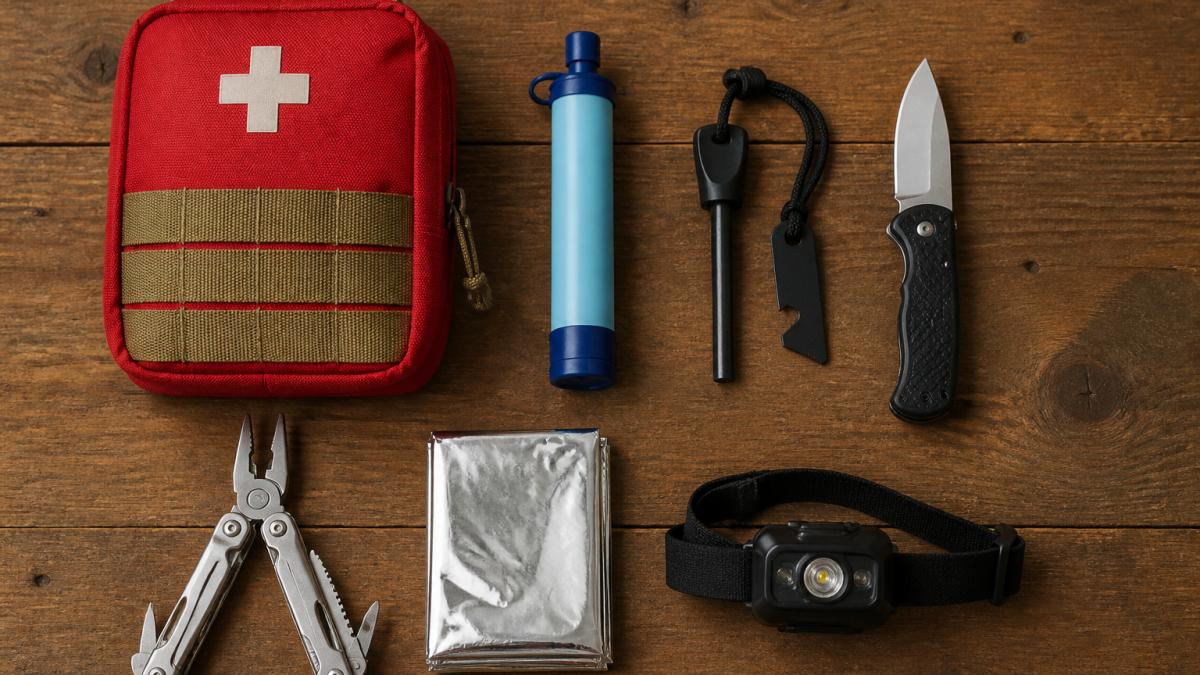
Use this checklist to audit any kit:
- Water: filter, purification tablets, or both
- Food: shelf-stable rations for your household size
- Fire: lighter plus ferro rod or waterproof matches
72-Hour Emergency Kit: What a Real Three-Day Kit Needs
A 72-hour emergency kit needs enough water, food, medication, and warmth for three full days per person, plus a way to carry it. That window covers the gap between a disaster and organized relief.
Water is the item most kits underestimate. FEMA's guidance points households toward a gallon per person per day for drinking and sanitation, which means a family of four needs roughly 12 gallons for three days.
Food should be shelf-stable and require no cooking if possible.
Pack your 72-hour kit for the weakest member of your household, not the strongest. If a child, senior, or someone with mobility limits cannot carry or operate an item, it does not belong in the go-bag.
Matching a Kit to Your Scenario: Home, Vehicle, or Wilderness
The right kit depends on where it lives, who it protects, and how much weight you can carry. A home kit can be heavy; a vehicle kit must handle heat, cold, and long waits; a wilderness kit must be carried on your back.
Home Emergency Kit: Sizing for Your Household
A home kit is the base layer. It should cover every household member for at least three days and be stored where you can reach it without a flashlight.
What to include:
- Water: one gallon per person per day for drinking and sanitation, plus a filter or purification tablets for refilling
- Food: shelf-stable, no-cook rations for the household size
- Medical: a sealed pouch with standard-size bandages, antiseptic, and a medication list
Sizing rule: plan for the weakest member of the household first. If a child, senior, or someone with mobility limits cannot carry or operate an item, it does not belong in the go-bag.
Vehicle Kit: Heat, Cold, and Long Waits
A vehicle kit lives in the worst environment a kit will ever see: temperature swings, vibration, and long neglect. Focus its contents on warmth, visibility, and communication.
What to include:
- Blankets or emergency blankets for each seat
- A reflective vest and warning triangle
- A flashlight with spare batteries
Trade-off: vehicle kits are often the most neglected. Set a calendar reminder to check expiration dates and battery condition twice a year, ideally when you change your clocks.
Wilderness Kit: Weight Is the Constraint
A wilderness kit must be carried, so every item earns its place. Prioritize water, fire, shelter, knife, and navigation; leave comfort items for the vehicle kit.
What to include:
- Water filter or purification tablets
- Two independent fire-starting methods
- A bivvy or emergency blanket
Trade-off: fishing gear and specialty equipment only if the trip calls for it. A kit that tries to cover every wilderness scenario becomes too heavy to carry, which defeats the purpose.
Matching the Kit to the Person
For anyone with mobility limitations, choose gear that sets up without strength or fine motor work: a bivvy over a tent, a lighter multi-tool over a fixed-blade knife, a headlamp over a handheld light. For families, assign each adult a role and a kit, and practice opening them together.
A Quick Scenario Comparison
| Scenario | Priority | Weight Target | Key Items |
|---|---|---|---|
| Home | Coverage and restockability | Heavy is fine | Water, food, medical, radio, documents |
| Vehicle | Warmth and visibility | Moderate | Blankets, vest, jumper cables, water, flashlight |
| Wilderness | Portability and redundancy | Light | Filter, fire starters, shelter, knife, navigation |
The best Stealth Angel Survival alternative for you is the one that fits the scenario you actually face, not the one with the highest piece count. Start with the scenario, then screen kits against the contents list.
Common Mistakes to Avoid When Buying a Survival Kit
The most common mistake is buying on piece count instead of category coverage. A 250-item kit that misses water treatment is worse than a 40-item kit that covers every essential.
Other mistakes we see often:
- Never opening the kit. You cannot use gear you have not handled.
- Ignoring expiration dates. Medical supplies and purification tablets expire; set a calendar reminder to rotate them.
- Buying for a fantasy scenario. Match the kit to your real risks: storms, power outages, vehicle breakdowns, and hikes.
The National Weather Service's severe weather safety resources are a practical starting point for identifying which hazards actually affect your area, and that list should shape your kit more than any product page.
Judge a survival kit by what it covers and whether you can restock it, not by how many items the box claims. Coverage and repairability beat volume every time.
Conclusion
The search for the best Stealth Angel Survival alternatives comes down to one question: does the kit fit your life, your risks, and your hands? Piece counts and marketing photos will not answer that.
At North American Tactical Supply, we build practical, all-in-one kits with honest materials and clean design, made to work better and last longer.
Frequently Asked Questions
What are the best alternatives to Stealth Angel Survival kits?
The best survival kit alternatives are kits built around clearly listed contents, replaceable components, and a warranty you can verify. Instead of chasing a single brand, compare kits by what's actually inside: a water filter or purification tablets, a fire starter, a first aid kit, an emergency shelter or bivvy, and a multi-tool. Brands selling through outdoor retailers and dedicated preparedness shops often publish full contents lists and replacement part availability, which makes long-term ownership easier than buying a sealed kit you can't inspect.
How do I choose a survival kit for my family?
Start with your scenario, not the kit. A 72-hour emergency kit for a family of four needs enough water, food, and warmth for four people across three days, plus medications and copies of documents. Check the contents list against an emergency survival kit checklist, confirm expiration dates on food and medical supplies, and make sure the bag is light enough for the smallest adult to carry. If you have mobility limitations, prioritize kits with grab handles, wheels, or modular pouches you can move into a smaller pack.
Are all-in-one survival kits worth buying?
They can be, if the contents are honest. A good all-in-one kit saves you the research and sourcing time and usually costs less than buying each item separately. The risk is filler: cheap knives, tiny first aid pouches, and lighters that fail in wind. Before buying, look for a full contents list with brand names or specifications, check whether the fire starter is windproof, and confirm the water filter has a real micron rating. If the listing won't tell you what's inside, that's your answer.
What should I check before buying a survival kit?
Check four things: contents list, build quality, replacement availability, and expiration dates. A complete contents list lets you compare kits side by side and spot missing essentials. Build quality shows up in zippers, stitching, and whether the knife and multi-tool are name brands or generics. Replacement availability matters because food, water purification tablets, and batteries expire, and you'll want to restock without buying a new kit. Finally, confirm the kit ships with current dates and that the seller offers returns if the contents don't match the listing.
