
Table of Contents
- Start With a Durable Camping Gear Checklist
- How to Inspect Camping Gear Before Buying
- How to Choose a Tent for Camping That Lasts
- Reading Specs and Testing Claims Without Getting Fooled
- Sleeping Bags, Pads, and Packs: Durability by Material
- Repairability, Warranties, and Replacement Parts
- Care and Storage That Extend Gear Lifespan
- Conclusion
- Frequently Asked Questions
Last Updated: October 21, 2026
Start With a Durable Camping Gear Checklist
Durable camping gear is equipment built to survive repeated use in rough outdoor conditions without failing at seams, zippers, or frames. Below, we'll show you exactly how to identify durable camping gear before you spend a dollar.
Here's what most guides get wrong: they tell you to buy "quality" without defining it. Quality is measurable. You can see it in stitch density, fabric weight, and warranty terms.
The 12-Point Pre-Purchase Checklist
Run every item through this list before buying:
- Stitching is tight and even (8-10 stitches per inch)
- Seams are taped or sealed, not just sewn
- Zippers are metal or heavy-duty coil, not thin plastic
- Stress points have bartacks or reinforcement patches
- Fabric feels dense, not thin or slick
- Waterproof rating is stated in millimeters
- Poles are aluminum, not fiberglass
- Buckles and clips flex without cracking
- Guy line attachment points are double-stitched
- Warranty covers defects for 1+ year
- Replacement parts are sold separately
- Weight matches the intended use
How to Inspect Camping Gear Before Buying
Inspection takes five minutes and saves seasons of frustration. Start with the seams, then work outward to hardware and fabric. The goal is not to find one perfect spec but to spot the construction shortcuts that predict early failure.
A Systematic Inspection Sequence
Work through these steps in order. Each one targets a known failure point.
- Turn the item inside out. Interior seams reveal construction quality that exterior finishing often hides. Look for untaped seams on waterproof items, loose thread tails, and skipped stitches.
- Check stitch density and consistency. Aim for 8-10 stitches per inch on load-bearing seams. Fewer stitches per inch means less thread holding the fabric together under tension. Uneven spacing signals rushed manufacturing.
- Test every zipper. Run it fully open and closed three times. It should glide without catching, and the slider should not separate behind the pull. Metal or heavy-duty coil zippers outlast thin plastic coils, especially on shelters and packs.
- Flex the hardware. Squeeze buckles, clips, and cord locks. They should flex and return without cracking or whitening at stress points. Brittle plastic is a warning sign.
- Inspect stress points. Look for bartacks (dense zigzag stitching) or reinforcement patches where straps meet fabric, where poles meet sleeves, and where guy lines attach. These are the first places gear tears.
- Evaluate fabric density and hand. Squeeze the fabric and hold it up to light. If light passes through easily, the weave is loose and will likely abrade through faster on rough ground. Dense, tight weaves resist abrasion better.
- Check pole and frame joints. Aluminum poles should flex and return to shape. Fiberglass splinters. Look for reinforced ferrules and clean joint inserts.
- Confirm seam sealing on waterproof items. Taped or sealed seams are essential; sewn-only seams leak under pressure even when the fabric itself is waterproof.
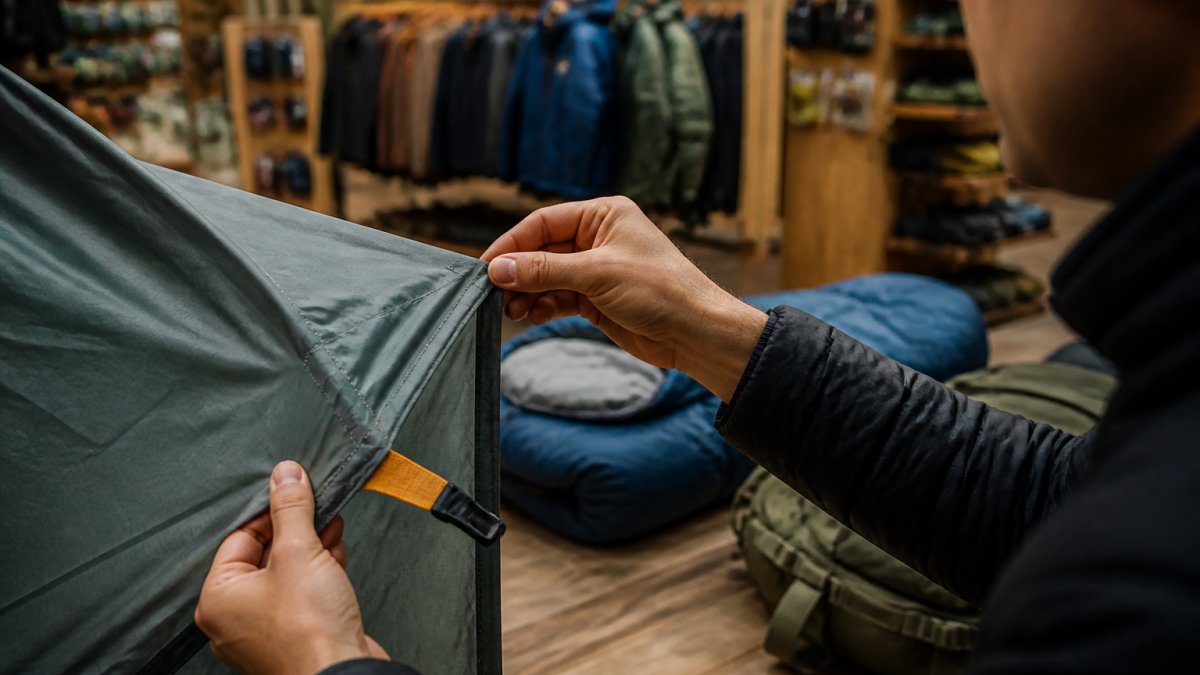
A common mistake is judging gear by feel alone. Squeeze the fabric. If light passes through easily, it will likely wear through fast on rough terrain.
Pass/Fail Quick Reference
- Pass: tight, even stitching; taped seams on waterproof gear; smooth zippers; reinforced stress points; dense fabric; aluminum poles; flexing hardware.
- Fail: loose or single stitching; untaped waterproof seams; catching zippers; unreinforced strap anchors; thin, light-passing fabric; fiberglass poles; brittle hardware.
If an item fails two or more checks, treat it as a durability risk regardless of brand or price.
How to Choose a Tent for Camping That Lasts
The most reliable tent for camping balances fabric weight, pole strength, and waterproof ratings. A 3-season dome tent with aluminum poles and a waterproof coating rated at 3,000 mm or higher handles most conditions well.
Tent types and weather suitability vary widely:
| Tent Type | Best For | Durability Notes |
|---|---|---|
| 3-season dome | Spring to fall camping | Light, breathable, moderate weather |
| 4-season | Snow and high wind | Heavier poles, reinforced seams |
| Inflatable cabin | Family trips, glamping | Thick air columns, no poles to bend |
For example, our Very Durable Inflatable Camping Tent for Family Camping uses TUP air columns instead of PVC, plus a PU 3000 mm waterproof tarp bottom. That construction removes the most common failure point: bent or snapped poles.

Check pole material first. Aluminum flexes and returns to shape. Fiberglass splinters.
Reading Specs and Testing Claims Without Getting Fooled
Spec sheets reward careful readers. A waterproof rating in millimeters tells you how much water pressure a fabric resists before leaking. Higher numbers mean better protection, but only when paired with taped seams. A 3,000 mm fabric with untaped seams can leak sooner than a 1,500 mm fabric with sealed seams.
Watch for vague claims like "water-resistant" with no number attached. That usually means a light coating that wears off.
What Common Ratings Actually Tell You
- Waterproof rating (mm): Measures resistance to water pressure on the fabric, not seam performance or coating durability. It says nothing about how the coating holds up after repeated folding and abrasion.
- Temperature rating: Describes the lower limit at which a sleeping bag is intended to keep an average sleeper comfortable. It does not predict how insulation lofts after seasons of compression or how the shell fabric resists wear.
- Load capacity: States the maximum weight a pack or cot is designed to carry. It does not indicate how strap anchors, buckles, or frame joints will hold up under repeated loading.
- Denier: Measures fiber thickness, not abrasion resistance on its own. Weave, coating, and construction matter as much as the number.
Ask three questions of any testing claim:

- What standard was used?
- Was the test done on the whole product or just the fabric?
- Who performed it?
The Federal Trade Commission's guidance on environmental and performance marketing claims requires advertisers to back up claims with real evidence. If a brand can't explain its testing, treat the claim as marketing.
Durability Signals Beyond the Spec Sheet
Specs describe performance at a moment in time. Durability is about what happens after repeated use. Look for these signals:
Very Durable Inflatable Camping Tent for Family Camping. →
- Stated coating type and thickness, not just waterproof rating.
- Seam construction details (taped, sealed, or sewn only).
- Hardware brand or specification (zipper and buckle types).
- Availability of replacement parts.
- Warranty terms that cover seams and hardware, not just manufacturing defects.
A product with modest ratings but honest construction and repairable design often outlasts one with impressive numbers and no support.
Sleeping Bags, Pads, and Packs: Durability by Material
Material choice predicts lifespan better than price. Ripstop nylon resists tears. PU-coated oxford holds up to abrasion. Foam pads outlast thin inflatable pads on rough ground.
For sleeping bags, check the shell fabric and insulation fill. Our Recon 4 Sleeping Bag pairs a 210T ripstop nylon shell with a 210D nylon oxford foot box, reinforced specifically to survive boot contact.
Backpacks follow the same logic. Look for:
- Denier ratings of 200D or higher on high-wear panels
- Bar-tacked strap anchors
- Replaceable buckles
- YKK-style zippers
Hiking boots and footwear deserve the same scrutiny. Check welt construction and sole attachment before anything else.
Repairability, Warranties, and Replacement Parts
Gear you can fix is gear that lasts. Before buying, confirm the brand sells replacement poles, buckles, patches, and zippers.
Warranty terms matter too. A lifetime warranty on seams signals confidence. A 30-day warranty signals the opposite.
Ask these questions:
- Are replacement parts sold directly?
- Does the warranty cover normal wear or only defects?
- Is repair service offered?
The Consumer Financial Protection Bureau's consumer complaint resources can help you research a seller's track record before a large purchase.
Care and Storage That Extend Gear Lifespan
Storage decisions quietly determine how many seasons your gear survives. Clean and dry everything before it goes into the closet.
Follow these habits:
- Never store tents or bags compressed long-term
- Wash with mild soap, never detergent
- Dry fully in shade before packing
- Store in a cool, dry space
- Patch small holes immediately
The National Park Service guidance on outdoor safety and preparedness reinforces that well-maintained equipment is a safety issue, not just a money issue.
Our 5-in-1 Foldable Tent Cot shows how elevated platforms reduce ground wear on fabric over time.

Conclusion
Learning how to identify durable camping gear comes down to inspection, material knowledge, and honest spec reading. Most failures are visible before purchase if you know where to look.
That's where we come in. North American Tactical Supply builds all-in-one solutions with honest materials and clean design, made to work better and last longer. Our gear gives you confidence in every outdoor scenario, from weekend hikes to emergency readiness.
Shop now and equip yourself with gear built for the long haul.
Frequently Asked Questions
How can you tell if camping gear is good quality?
Look at construction before marketing claims. Check for double-stitched seams, taped or bonded rainfly seams, reinforced stress points at pole sleeves and pack straps, and hardware from named brands like YKK zippers. Squeeze the fabric: durable camping gear uses ripstop weaves and higher denier counts that resist tearing. Ask about warranty length and whether replacement parts are sold separately. A lifetime or multi-year warranty backed by available parts is a stronger quality signal than a low price or a bold durability claim.
What materials make camping gear more durable?
For tents, ripstop polyester or nylon in the 20D to 75D range with silicone or PU coatings handles weather and abrasion well; the Umbrauto 4 Person Ultralight Tent uses 20D Plaid Ripstop Polyester with a 5000mm silicone coating. Sleeping bags benefit from ripstop nylon shells and synthetic insulation like DuPont Thermolite, as in the Recon 4 Sleeping Bag. Backpacks last longer with 210D to 500D nylon or polyester bodies, bar-tacked strap anchors, and metal over plastic hardware at load points.
Does a higher price mean camping gear is more durable?
Not automatically. Price often reflects brand marketing, weight savings, or features rather than raw durability. A $109.99 three-season dome tent can outlast a heavier, pricier model if its fabric, coatings, and stitching are better. Compare the specs that matter: denier, hydrostatic head rating, seam treatment, zipper brand, and warranty terms. Expensive ultralight gear sometimes trades durability for grams. Judge each piece on construction and repairability, not the price tag alone.
How should you care for camping gear to make it last longer?
Store tents and sleeping bags clean and fully dry, never compressed long-term. Loosen sleeping bag compression sacks between trips and hang bags to dry immediately after washing, as the Recon 4 care instructions specify. Clean tents with mild soap, avoid harsh detergents, and reapply waterproofing to rainflies when water stops beading. Wipe down tent stakes and poles to prevent corrosion, repair small tears with patches before they spread, and keep gear out of hot storage areas where coatings degrade faster.